


Why Choose Paraben-Free Lotions? Ingredients to Avoid and Why They Matter
When selecting a hand cream for dry hands, most people focus on immediate concerns: softness, moisturization, scent. But sophisticated consumers increasingly recognize that ingredient composition matters as much as performance. The difference between conventional lotions and paraben free lotions represents a fundamental choice about what you are allowing into your body through the skin's largest surface area.
At Nordic Care, we believe informed consumers deserve complete information about why paraben free lotions matter, what ingredients warrant avoidance, and how ingredient choices directly impact long-term wellness. This is not fearmongering—it is science-backed guidance helping you make decisions aligned with your health priorities.
In this comprehensive guide, we will explain what parabens are, why some experts recommend avoiding them, identify other concerning ingredients in conventional skincare, and help you understand why paraben free lotions represent a meaningful wellness investment.
Understanding Parabens: What They Are and Why They Are Used
Paraben Chemistry 101
Parabens are synthetic preservatives widely used in cosmetics, skincare products, and pharmaceuticals. The most common types include:
- Methylparaben (MeP)
- Ethylparaben (EtP)
- Propylparaben (PrP)
- Butylparaben (BuP)
Their Purpose
Parabens extend product shelf life by preventing bacterial and fungal growth. A hand cream for dry hands without preservatives might be theoretically "purer," but would deteriorate rapidly, becoming contaminated and unusable. For decades, parabens seemed like an ideal solution—cost-effective, reliable, stable.
Market Prevalence
Research indicates that parabens appear in over 22,000 cosmetic products globally, making them among the most commonly used preservatives. This ubiquity means most people apply paraben-containing products daily without conscious awareness.
Why Some Experts Question Paraben Safety
The Controversy: Hormone Disruption Concerns
The primary concern regarding parabens centers on their potential as endocrine disruptors—chemicals that may interfere with hormonal systems. Key research findings include:
Bioaccumulation Studies:
Research demonstrates that parabens accumulate in human tissue, including breast tissue. Studies detect parabens in blood samples, urine, breast tissue, and other biological matrices—suggesting that topical application leads to systemic absorption.
Hormonal Effects:
Laboratory studies indicate that parabens can mimic estrogen and potentially interfere with androgen (male hormone) signaling at certain concentrations. While regulatory agencies maintain that typical consumer exposure is below concerning levels, some researchers argue that cumulative lifetime exposure warrants precaution.
Breast Cancer Associations:
Some epidemiological studies have suggested correlations between paraben exposure and breast cancer risk. It is important to note that correlation does not establish causation—definitive causality remains unproven. However, these associations have motivated regulatory bodies to reconsider paraben safety.
Regulatory Responses
European Union Approach:
The EU banned certain parabens (propylparaben and butylparaben) from leave-on cosmetic products and restricted others, reflecting the precautionary principle: when uncertainty exists regarding safety, erring toward caution is warranted.
United States Position:
The FDA has not banned parabens but acknowledges that some research raises questions about safety at certain concentrations. The FDA concludes that typical consumer exposure is likely safe, but some scientists argue that regulatory thresholds should be more conservative.
The Cumulative Exposure Problem
A critical concern that regulatory agencies often underestimate is cumulative exposure. A single hand cream containing parabens might deliver an individually "safe" dose. But when consumers also use paraben-containing shampoos, deodorants, toothpastes, and cosmetics, cumulative lifetime paraben exposure becomes substantial.
This is precisely why paraben free lotions matter—they reduce total body burden of these chemicals without requiring perfection across all products.
Other Ingredients Worth Avoiding
Beyond parabens, conventional skincare contains numerous concerning chemicals:
1. PEGs (Polyethylene Glycols)
What They Are:
PEGs are penetration enhancers allowing other chemicals to absorb more deeply into skin.
The Concern:
PEGs are often contaminated with 1,4-dioxane, a probable carcinogen. While manufacturers are not required to disclose dioxane contamination, analytical testing frequently detects it.
Why It Matters:
PEGs transform skin into a more permeable barrier, potentially allowing other chemicals (including contaminants) deeper absorption than intended.
2. Formaldehyde-Releasing Preservatives
Examples:
Imidazolidinyl urea, diazolidinyl urea, DMDM hydantoin
The Concern:
These preservatives slowly release formaldehyde as a byproduct. Formaldehyde is a known carcinogen and skin sensitizer.
Why It Matters:
Consumers applying these products are receiving chronic, low-level formaldehyde exposure without awareness.
3. Phthalates (Hidden in "Fragrance")
What They Are:
Phthalates are plasticizing chemicals used to make fragrances last longer on skin.
The Concern:
Phthalates are known reproductive and developmental toxins. The EU banned them; the US allows them.
Why It Matters:
"Fragrance" on product labels is not required to list specific components, so phthalates remain hidden from consumers. This is among the most problematic aspects of current cosmetic labeling.
4. Sodium Lauryl Sulfate (SLS) / Sodium Laureth Sulfate (SLES)
What They Are:
Harsh surfactants creating lather in cleansing products.
The Concern:
SLS causes skin irritation and penetrates deeply, potentially carrying other chemicals deeper into skin. SLES is often contaminated with 1,4-dioxane (same concern as PEGs).
5. Mineral Oil and Petroleum Derivatives
What They Are:
Refined petroleum byproducts used as emollients and occlusive agents.
The Concern:
Mineral oil coats skin, potentially trapping bacteria and preventing natural moisture regulation. While not acutely toxic, it represents inert, non-functional ingredients offering no nutritional or therapeutic value.
The Case for Paraben-Free Lotions: What Research Supports
Market Trends Reflect Consumer Concern
Recent market research shows 13.5% of skincare products are now paraben-free—a significant and growing segment. This shift is not driven by regulatory mandate but by consumer demand and manufacturer recognition that safer alternatives exist.
Better Alternatives: What Works
Natural Preservatives:
Plant-based preservatives like rosemary extract, grapefruit seed extract, and tocopherols (vitamin E) offer antimicrobial properties without controversial synthetic chemicals.
Fermentation-Derived Preservatives:
Certain naturally-derived preservatives created through fermentation processes maintain shelf stability safely.
Encapsulation Technologies:
Advanced formulation techniques create "natural" preservation through encapsulation, reducing preservative requirements.
Performance Equivalence
Importantly, paraben-free lotions perform as effectively as conventional alternatives. A quality hand cream for dry hands formulated without parabens moisturizes, protects, and extends shelf-life comparably to paraben-containing alternatives. The difference lies entirely in ingredient philosophy.
Selecting Your Paraben-Free Hand Cream
What to Look For
Clear Paraben-Free Labeling:
Look for explicit "paraben-free" designation. Do not assume absence—verify explicitly.
Recognize Other Harmful Ingredients:
Beyond parabens, avoid products containing PEGs, phthalates, formaldehyde-releasing preservatives, and mineral oil.
Functional Ingredients:
Seek products featuring:
- Plant oils (jojoba, argan, sunflower)
- Glycerin or humectants attracting moisture
- Botanical extracts with anti-inflammatory properties
- Natural preservatives clearly identified
Third-Party Verification:
Certifications from organizations like EWG (Environmental Working Group) or Leaping Bunny provide independent verification of ingredient safety and ethical practices.
Nordic Care's Commitment to Clean Skincare
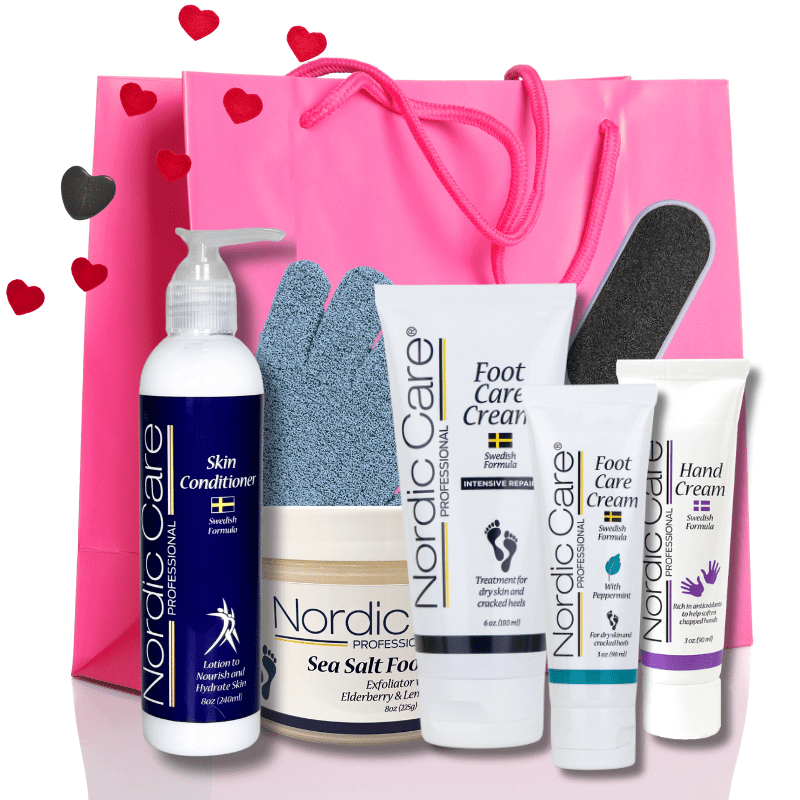
Nordic Care specializes in paraben-free lotions and hand creams for dry hands formulated with intentional ingredient selection. Every product is evaluated against rigorous safety standards—not just regulatory minimums, but standards reflecting current scientific understanding of chemical safety.
Our philosophy recognizes that skincare is not merely cosmetic—it is part of comprehensive wellness. Ingredients matter. Formulations matter. Transparency matters.
Frequently Asked Questions (FAQs)
Q: Are parabens actually dangerous?
A: The evidence is mixed. Regulatory agencies maintain that typical consumer exposure is safe. However, emerging research suggests potential concerns at higher concentrations or with cumulative lifetime exposure. Many experts recommend avoiding unnecessary exposure through paraben-free alternatives.
Q: If parabens are safe, why choose paraben-free lotions?
A: It is a precautionary choice reflecting an evolving understanding of chemical safety. Waiting for definitive proof of harm before switching to safer alternatives may expose you to unnecessary risk over decades.
Q: Do paraben-free products actually work as well?
A: Yes. Quality hand creams for dry hands formulated without parabens perform equivalently to conventional products. Effectiveness depends on hydrating ingredients, not preservative type.
Q: What is the most concerning ingredient after parabens?
A: PEGs (particularly when contaminated with 1,4-dioxane) and hidden phthalates in "fragrance" warrant significant concern because they penetrate deeply and consumers often lack awareness of their presence.
Q: How do I know if a product is truly paraben-free?
A: Check the ingredient label explicitly. Look for "paraben-free" marketing, but verify the complete ingredient list. Do not trust marketing alone—read actual ingredients.
Q: Should I avoid all preservatives?
A: No. Preservatives prevent bacterial and fungal growth, protecting you from infection. Choosing paraben-free alternatives using natural preservatives is the goal—not eliminating preservation entirely.
Q: Are natural preservatives as effective as synthetic ones?
A: Modern natural preservatives (plant extracts, fermented derivatives) perform very well. They may require slightly higher concentrations, but effectiveness is comparable.
Q: Will switching to paraben-free lotions dramatically improve my health?
A: Not overnight. However, reducing cumulative chemical exposure over decades contributes to long-term wellness. Health is cumulative—small daily choices accumulate into significant long-term outcomes.
Conclusion
Choosing paraben-free lotions represents a meaningful commitment to informed, intentional skincare. While regulatory agencies maintain that parabens are safe at current exposure levels, emerging research suggests that precautionary approaches—reducing unnecessary chemical exposure—align with evolving scientific understanding.
Hand cream for dry hands should nourish and protect without delivering chemicals of questionable long-term safety. Nordic Care's commitment to paraben-free formulations reflects both current scientific evidence and the precautionary principle: when safer alternatives exist, they warrant selection.
Your skin is your body's largest organ. What you apply to it matters. Choose ingredients deliberately. Choose transparency. Choose paraben-free lotions supporting both immediate skincare needs and long-term wellness.
Discover Nordic Care's Paraben-Free Hand Cream Collection
Nordic Care
Address: Unit 7 Tafarnaubach Industrial Estate, Ebbw Vale, Wales, UK
Phone: 01495 723201
Email: sales@nordiccare.com
Website: www.nordiccare.com
Office Hours: Monday–Friday, 9am–5pm GMT
Specialization: Paraben-Free Skincare, Natural Hand Creams, Chemical-Free Lotions


Leave a comment